


Description
About the Artwork
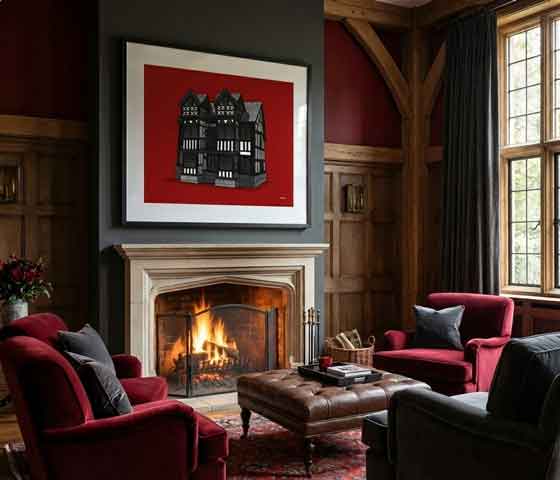
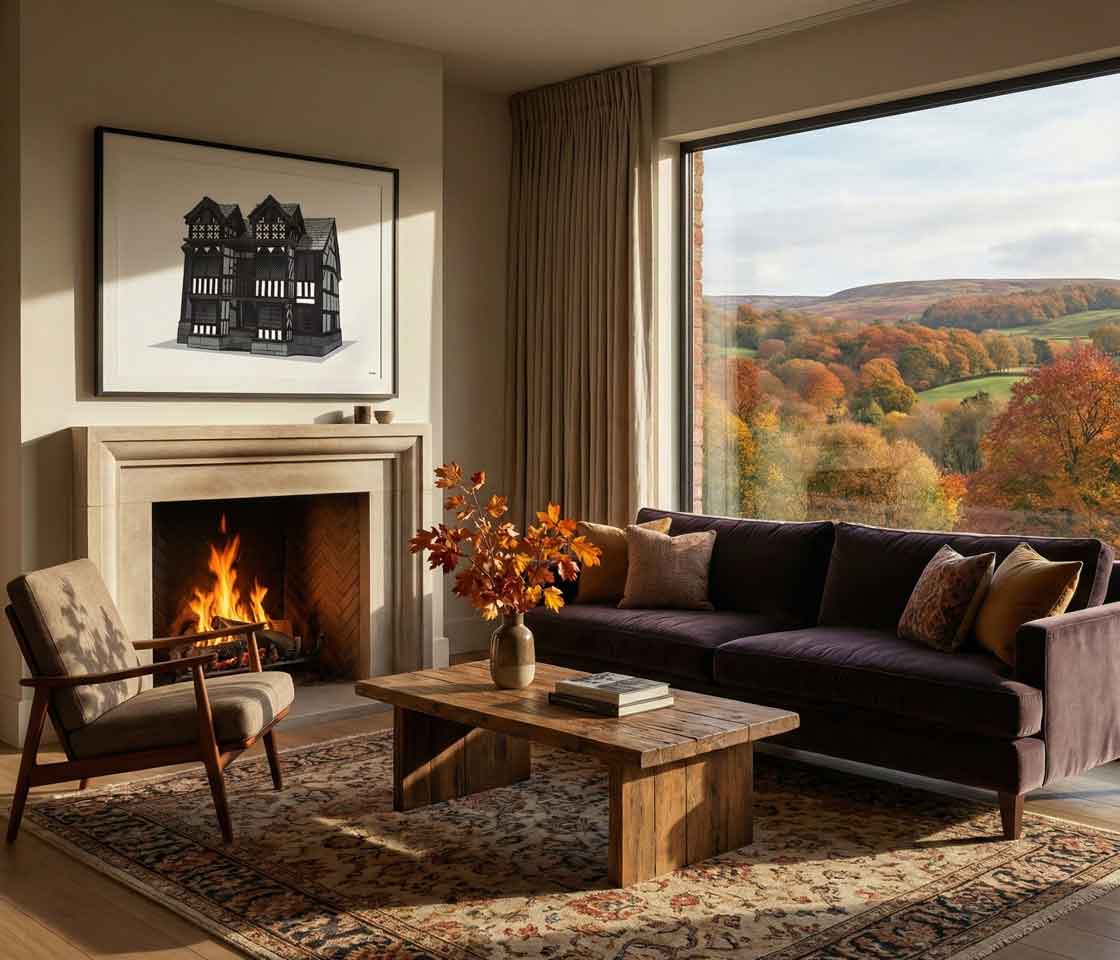
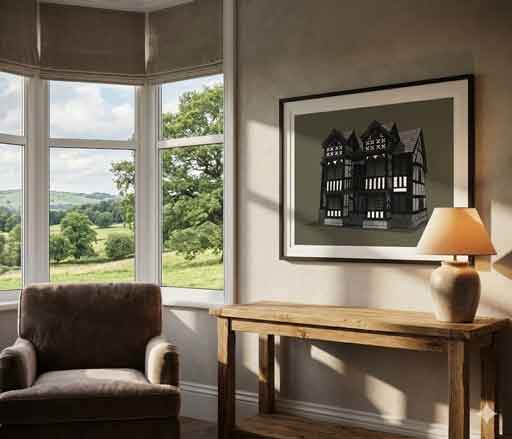
The Priest House in Prestbury is one of Cheshire’s most recognisable historic buildings — a late medieval timber-framed landmark with deep-set windows, decorative timber patterns, and a strong architectural silhouette. This Subtractionism illustration highlights all of those features while removing the visual noise that surrounds the real building today.
By stripping the structure down to its essential shapes and tonal contrasts, the artwork reveals the core geometry that makes the Priest House so timeless: its symmetry, its layered frontage, and the unmistakable character of Cheshire’s black-and-white heritage architecture.
Styling & Interior Use
This print works beautifully in:
• Modern apartments
• Minimalist interiors
• Modern living Rooms
• Home offices
• Studios and creative spaces
• Hallways and living rooms that suit architectural artwork
The bold monochrome style sits comfortably alongside contemporary furniture, soft neutrals, or industrial textures — adding a quiet but confident architectural presence to any room.
The Priest House in Prestbury, Cheshire, is a Grade II listed timber-framed building with origins possibly as early as 1448. It was originally the vicarage for the nearby St. Peter’s Church until 1709, when a new vicarage was built, after which it served as a private residence, and later a bank. Folklore suggests a secret passage ran between the building and the church, and it is famous for the balcony from which the local vicar is said to have preached to villagers during times of plague or civil unrest.
Historical timeline
• c. 1448: The building is first constructed, potentially as the vicarage for St. Peter’s Church.
• c. 1580: Construction may have been completed around this time, with some historians suggesting this as the date for the current timber-framed structure.
• 1603 & 1646: The vicar is said to have used the balcony to preach to the congregation assembled in the street below during plague outbreaks.
• 1642-1651 (English Civil War/Commonwealth): During periods when many church ministers were expelled, the local vicar allegedly preached from the balcony of the house after being banned from entering the church.
• 17th Century: The house is significantly altered in this century.
• 1709: The building is replaced as the official vicarage by the newly built Prestbury Manor House.
• Early 20th Century: The building becomes a bank, which is listed as National Westminster Bank at one point.
• 1968-1970: The building is restored, and two cast-iron firebacks are discovered during the restoration.
• Present Day: The building is a historic residence, recognised for its architectural significance, and was recently restored.

Reviews
There are no reviews yet.